

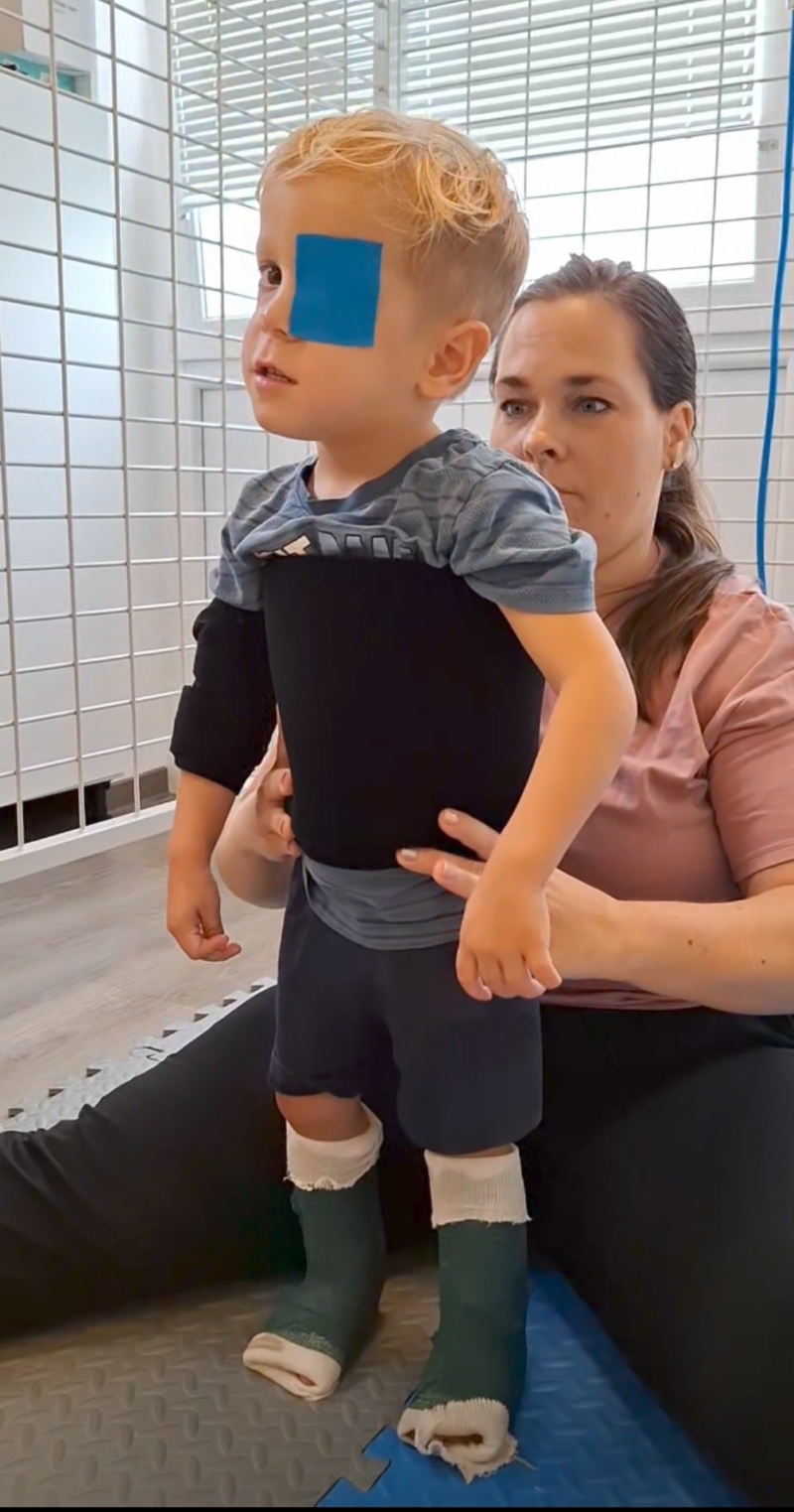
Movement Inhibition Therapy
Movement Inhibition Therapy is a non-traditional treatment designed for patients whose involuntary movements limit their functional abilities. This method enhances movement awareness and promotes neuroplastic changes, leading to more efficient and safer movement patterns.
Key Aspects of the Therapy
- Identifying appropriate reflex responses and integration timing.
- Recognizing primary and secondary impairments that restrict function.
- Understanding the consequences of involuntary movements and how to prevent complications.
- Using inhibitory movements in the correct sequence to enhance postural control.
- Implementing immobilization tools to improve movement quality.
Indications for Movement Inhibition Therapy
- Cerebral Palsy
- Hypertonic and hypotonic conditions
- Focal dystonia
- Stroke (Cerebrovascular or ischemic events)
- Arteriovenous malformations
- Viral encephalitis
- Kernicterus
- Spinocerebellar ataxia
- Developmental motor delays